Camtastic Newsletter September 2026
Chasing Totality: Meet the SIU Team Documenting Eclipses Across the Globe
By Molly Parker
LEÓN, Spain — Just before 8:30 p.m. in León — after months of grueling prep work and several 12-hour days — the light was draining fast, and the moment of reckoning had arrived.
For 45 minutes, a Southern Illinois University crew had seamlessly beamed live video of the approaching solar eclipse, alongside interviews with scientists and professors, to NASA+’s global broadcast. Now, as totality approached, there was a palpable shift in the on-set energy.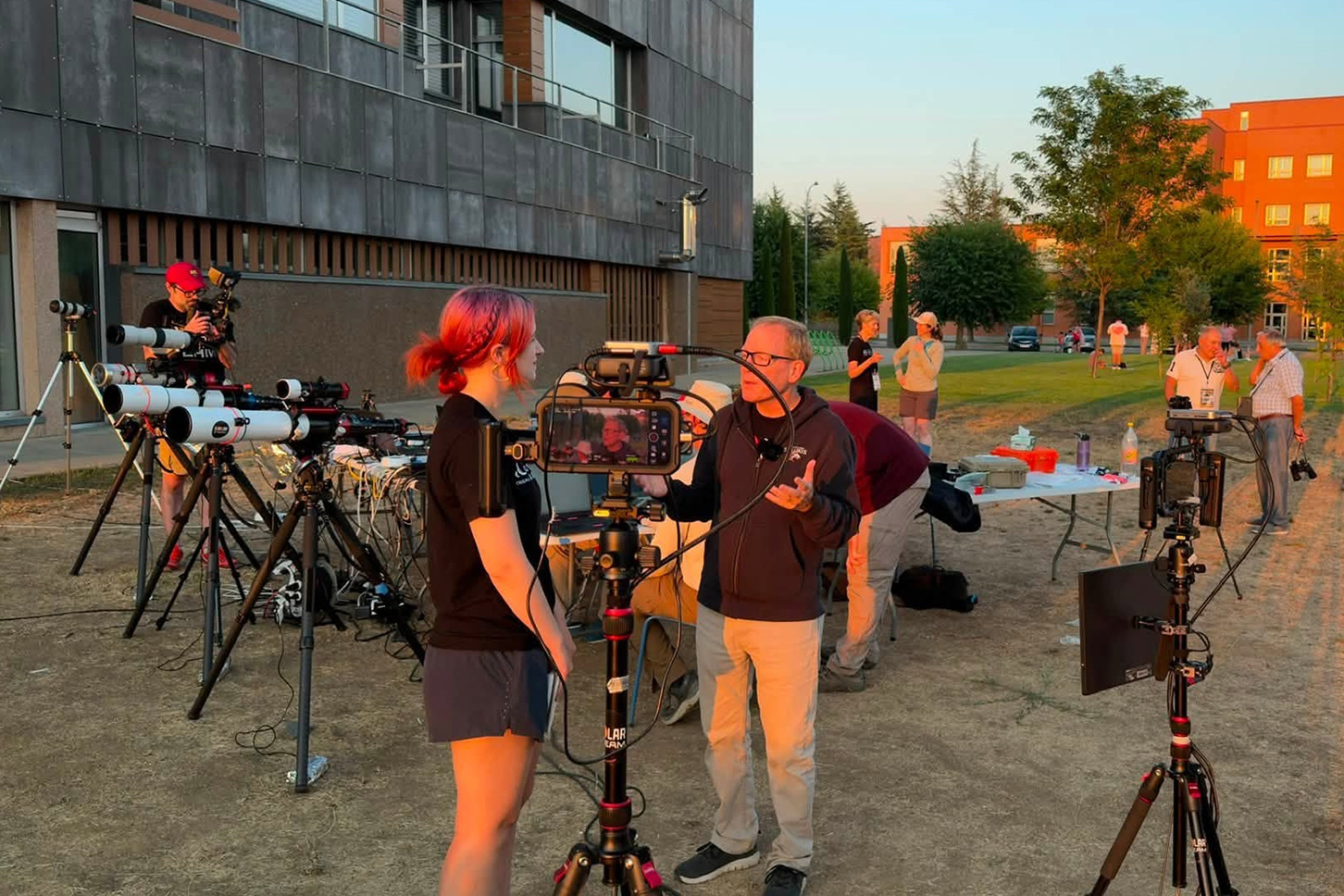
“We are so close to totality. The moment’s almost here,” co-host and SIU senior Annalise Gould told viewers on camera, turning to Dr. Corrinne Brevik, an associate professor of physics.
Brevik walked the audience through the final countdown: lunar valleys in the moon would let a brilliant line of dots slip through before the final flash of a diamond ring effect.
“There’ll be one bright light, and then it’ll be gone,” Brevik explained. “And then we’ll have totality.”
As the broadcast flipped to a full-screen telescope feed, a wave of commotion broke through the crew.
“Here we go, here we go, here we go!”
The countdown started, followed by shouts of “Look! Look up, look up, look up!”
Then came the gasps and cheers — the raw sound of true awe.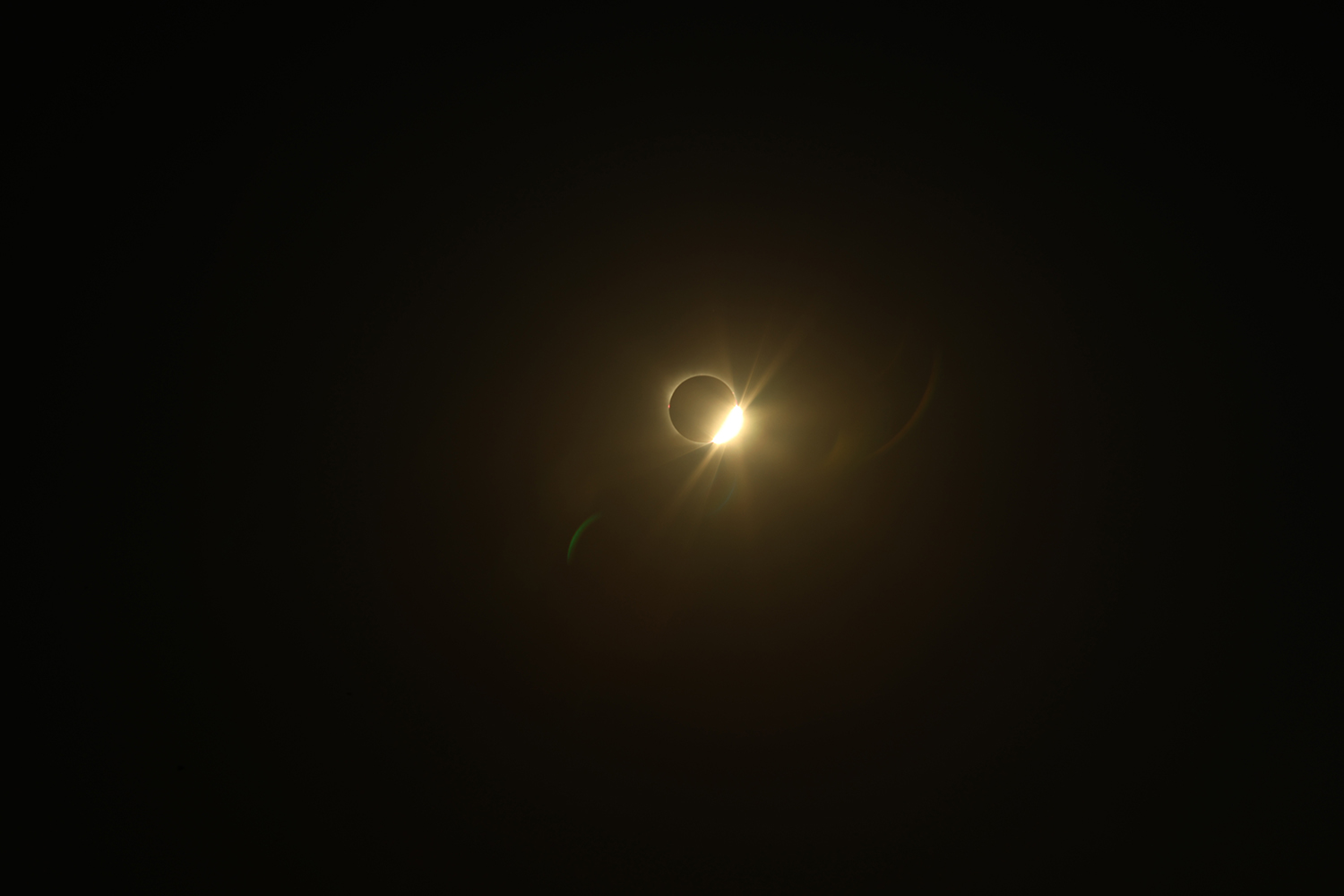 “Do you see that?”
Reaching totality — and streaming live feeds to NASA+ that hit Times Square and drew millions of views — was the trip's pinnacle. But the real work — and reward — extended far beyond the 1-½ minutes of darkness over León they’d traveled to document.
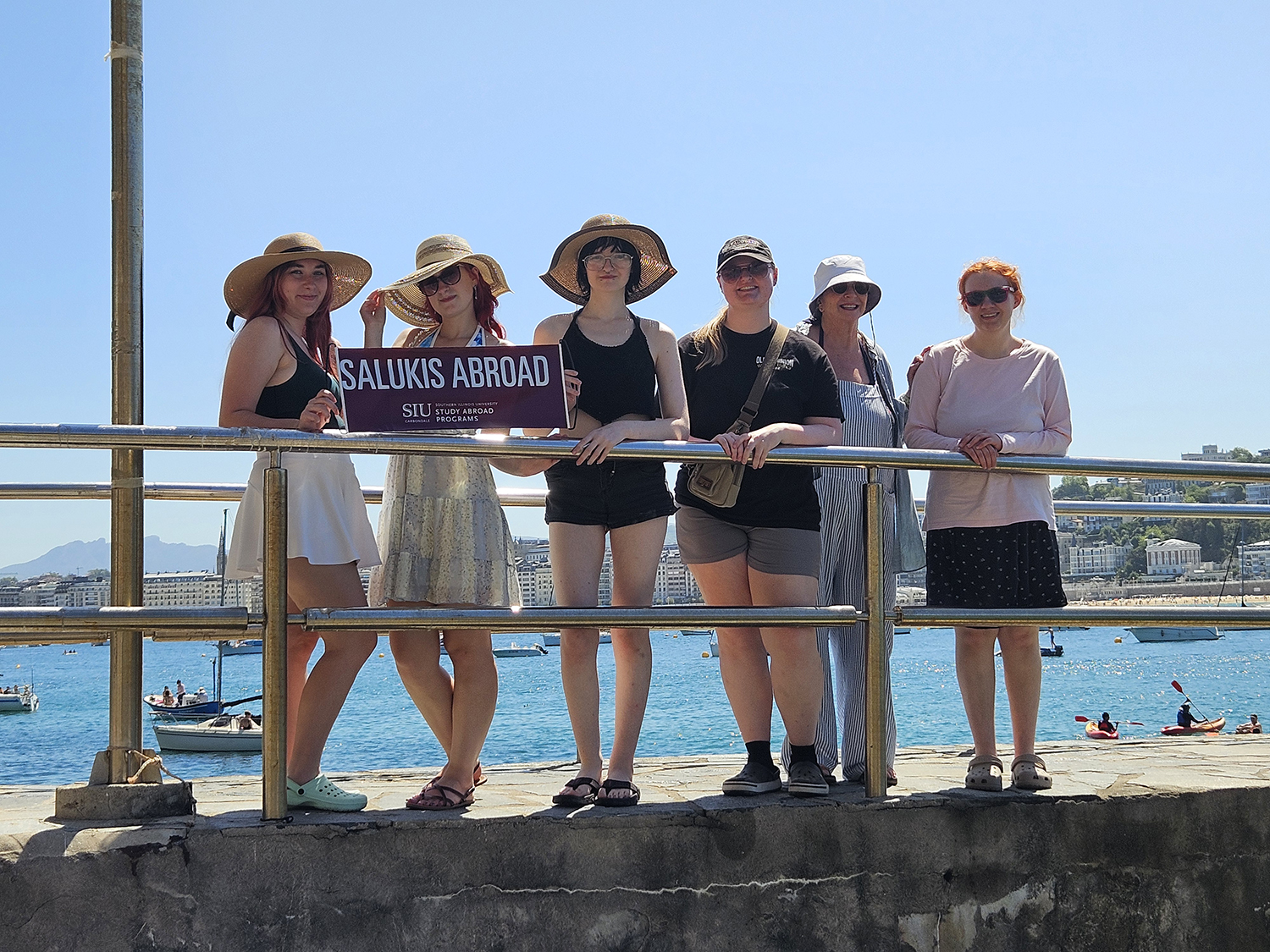
Roughly 15 SIU faculty and students traveled to León as part of the team’s participation in two NASA-backed heliophysics initiatives: Solar STEAM and the Dynamic Eclipse Broadcast (DEB) Initiative. Drawing talent across campus, the team consisted of faculty and students from the STEM Education Research Center, the College of Agricultural, Life and Physical Sciences and the College of Arts and Media.
“This project and this collaboration, what I think is so important is it’s immersive,” said Karla Berry, an associate professor in the School of Media Arts. “These students are there. They are doing it.”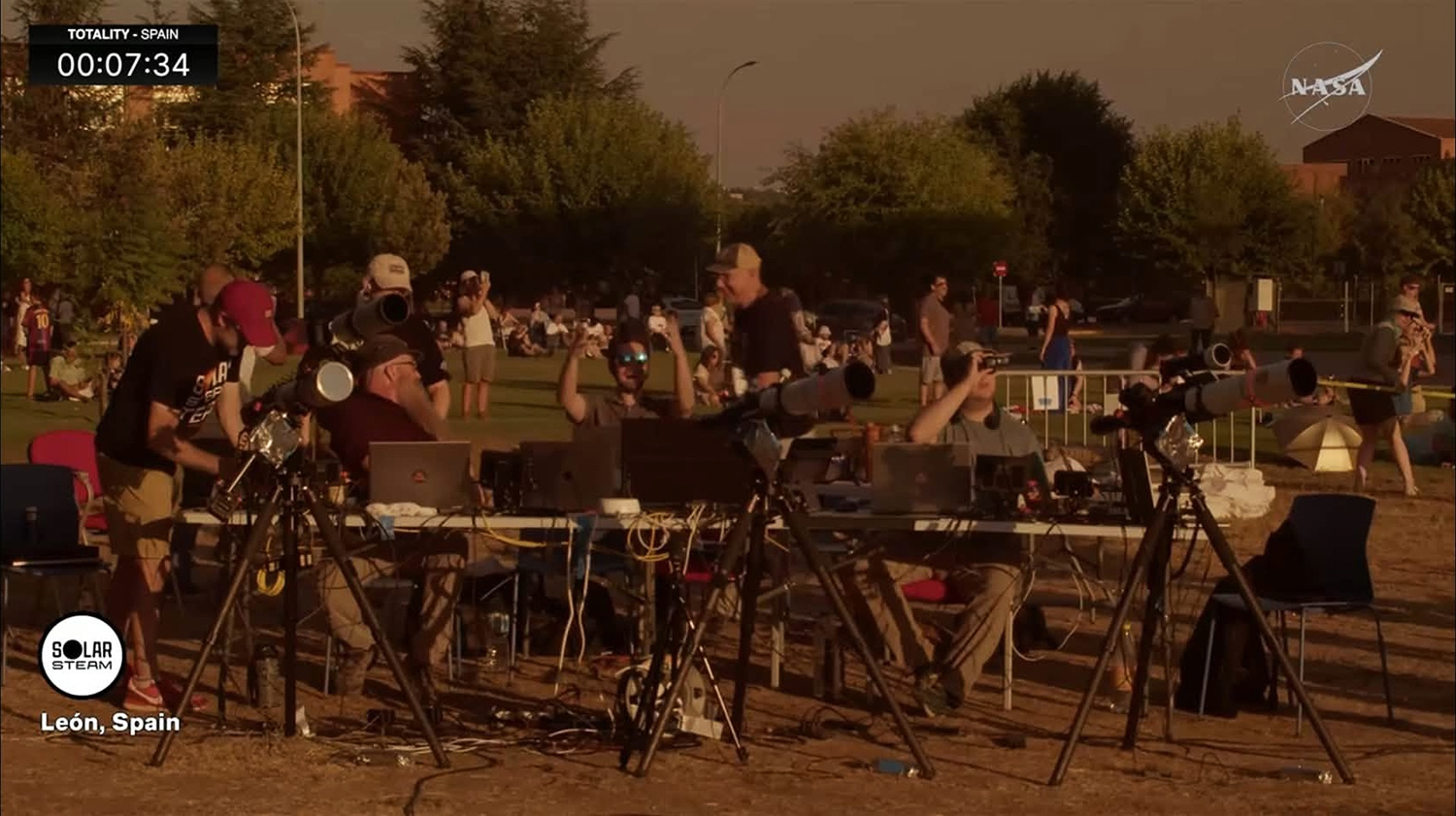
Funding the Mission
Pulling off an international scientific broadcast on a college budget required going after every dollar they could secure.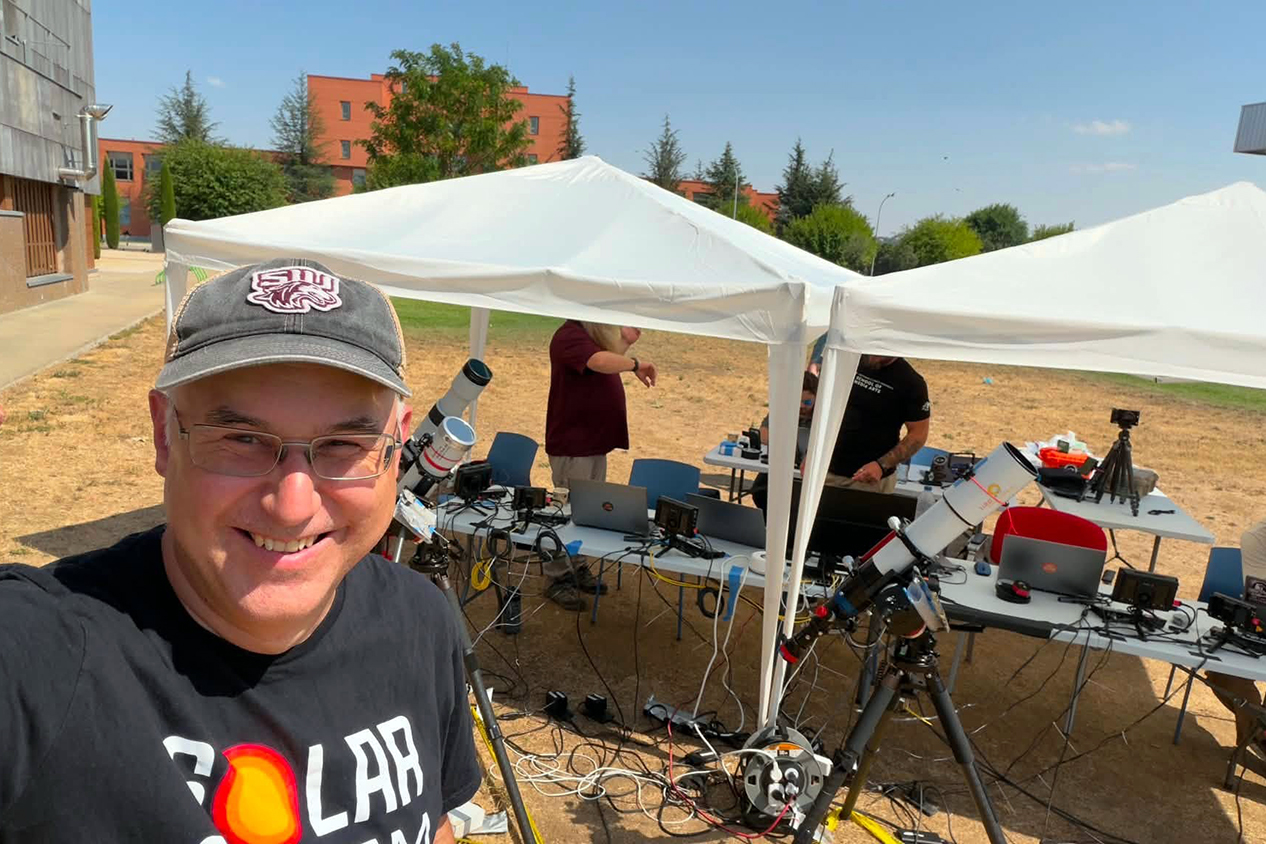 Bob Baer, an associate scientist in physics, said he wasn’t sure the team could make this eclipse trip work until they secured an SIU Foundation grant in a competition sponsored by the Office of the Vice Chancellor for Research. At the same time, Brevik checked if funds from a National Science Foundation-backed REAL Trip Field Model grant could cover international travel. The approvals for both hit around the same time in spring 2026. Then Baer traveled to León in June, scouting filming locations with Blair Allen, a producer with NASA Edge. After endless calls, Baer secured access to the University of León. Most of the SIU crew arrived in northern Spain well ahead of the Aug. 12 total solar eclipse — some via a two-week study abroad program, others squeezing in a quick vacation — before reporting for days of intense prep work. The high-tech production encompassed five distinct camera feeds — plus one remote feed and a dedicated crowd camera.
 NASA ingested SIU’s feeds and redistributed them across NASA+, YouTube, Netflix, Amazon and Twitch, alongside footage from two other teams.
The days were long and challenging, but “they never complained. They were very professional,” Berry said of the student workers.
‘Very rare ... real, professional experience’
Berry had initially recruited Gould to film daily vlogs on the study abroad trip, but when SIU found out the broadcast with NASA+ needed a co-host, Gould jumped at the opportunity.
“I will pretty much say yes to anything,” Gould said. “I love experiencing anything I can, and I’ve never worked on such a professional, large-scale set.”
During the broadcast, Gould interviewed guest scientists, including her study abroad mentor Brevik. When totality hit, both kept their microphones open to capture the raw emotion of the moment.
“We were both expecting to just scream when it happened, so we were trying really hard not to — trying to find things to say other than just ‘wow, wow,’” Gould said. “Having her raw, authentic excitement really pulled people in ... the energy exchange was really cool.”
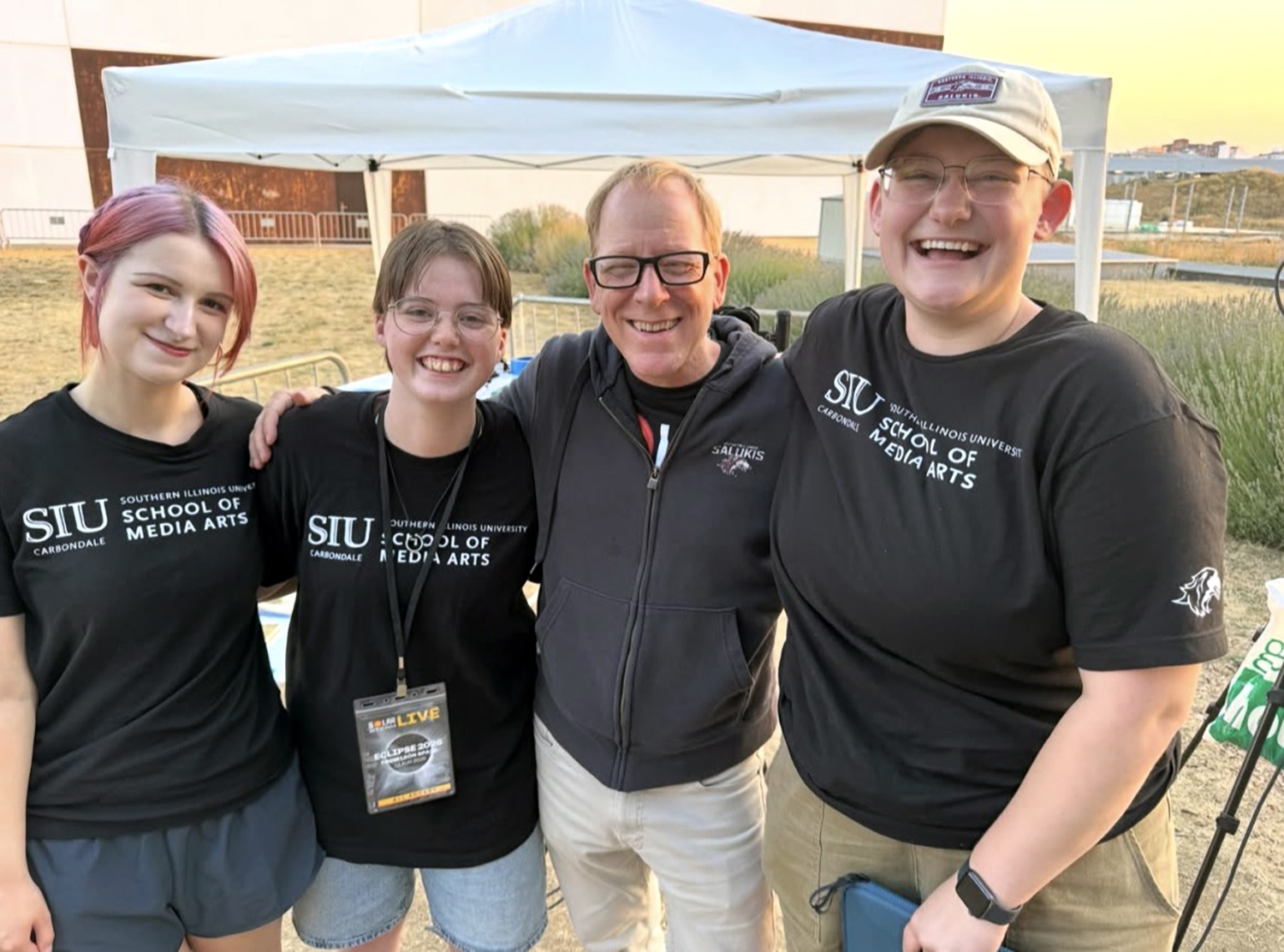
Everyone jumped in where needed.
Cinema senior Mallory Wagner and radio-TV senior Alayna Wagle originally were told their roles would be limited to capturing behind-the-scenes footage of the filming. They learned just a week prior during a dry run at SIU that their roles were changing dramatically, too: Wagner was tapped to direct, and Wagle was assigned as floor director and camera operator.
“We thought we were just taking pictures of everyone, but I was like, I’m absolutely in!” Wagner said.
During the broadcast, Wagner sat in the command seat calling camera switches and other on-set directions.
“It just absolutely exceeded my expectations of how awesome something could be,” Wagner said.
For Wagle, the high-pressure environment was a major milestone: “Getting my hands on equipment and in a production really did a lot to boost my confidence. I really feel like I belong here and can do it again.”
There were light moments: The crowd camera captured an impromptu happy dance between two SIU professors right as totality struck — and NASA+ streamed it directly onto the massive NASDAQ tower screen in New York City's Times Square.
And there were defining moments: For the team’s technical director, Adam Gunther, a senior double majoring in radio-TV and cinema, the experience solidified his aspirations to pursue a career in international broadcast news. His primary responsibility involved inputting NASA’s custom URLs into the broadcast system for every camera feed, enabling the agency to pull the live footage directly from Spain onto its own servers for streaming across NASA+ and official digital channels.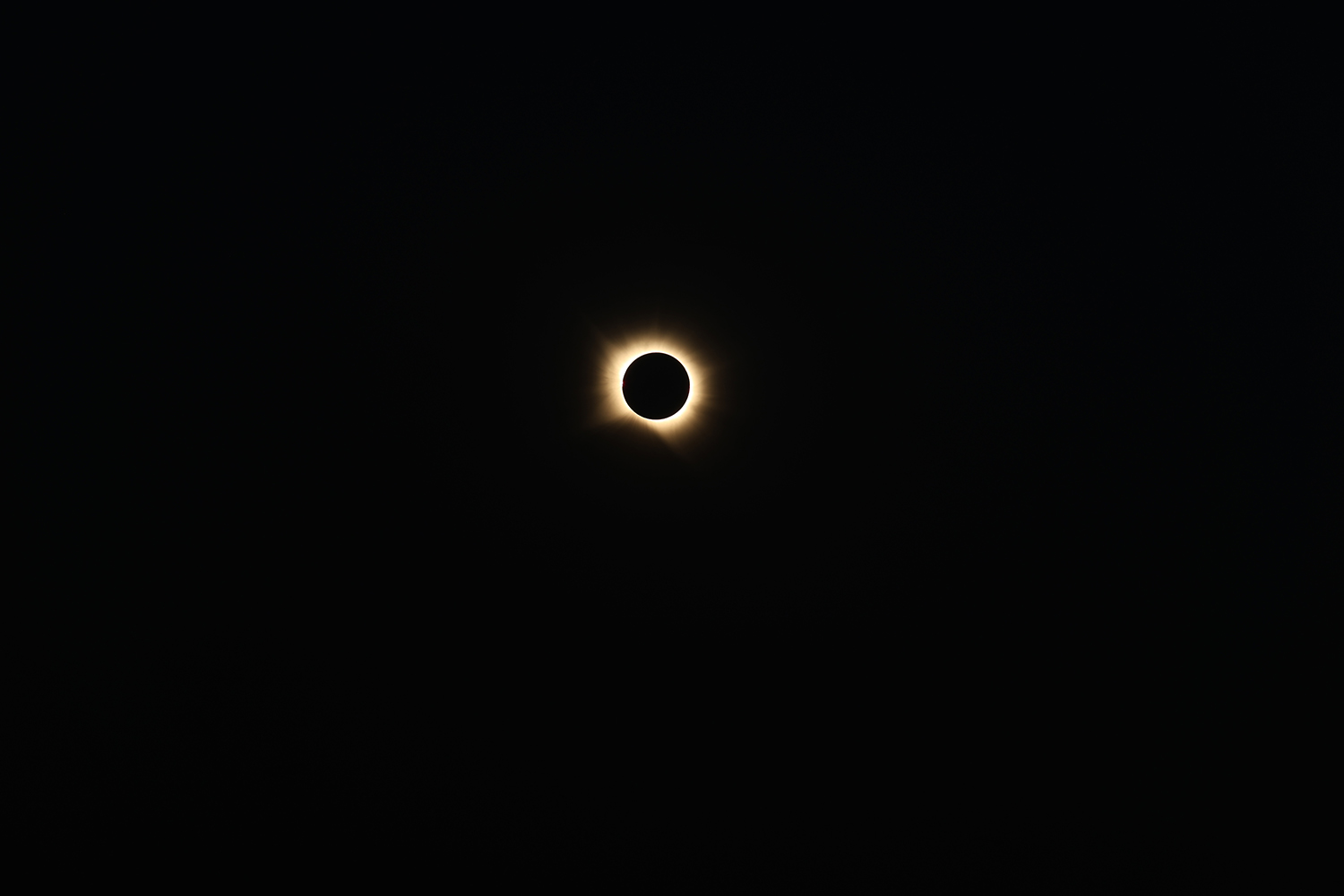
Though he’d witnessed three prior eclipses, Gunther said he had never fully appreciated the phenomenon until working alongside Baer and the team's astrophysicists.
“They have such a passion for it,” Gunther said. “I’m on the art side of it: How can I make this look cool? Knowing what I know about eclipses now gave me a whole different level of appreciation.”
“It was the highlight of my summer,” Gunther said of the trip.
For the SIU team, the trip showcased just how far this rural school’s name can reach.
“These media projects that mix research and media have just this massive reach and expose people around the world to SIU Carbondale,” Baer said.
For Berry, the immersive nature of the trip is what sets SIU’s program apart.
“Every media arts school in the country has some kind of live production, but we are very rare in this way, where students are getting this live, real, professional experience with such a wide reach,” Berry said. She noted that student contributions to NASA TV's 2024 eclipse broadcasts from Carbondale even earned them credits on an Emmy.
Looking Ahead: The ‘Eclipse of the Century’
Spain marked Baer’s fifth total solar eclipse journey, following expeditions to Indonesia (2016), Carbondale (2017 and 2024), and Australia (2023).
But the team is already looking toward the horizon: Aug. 2, 2027.
The upcoming eclipse — dubbed the “Eclipse of the Century” — will sweep across North Africa and the Arabian Peninsula, offering a massive 6-½ minutes of totality. The team has already identified volunteer networks and university partners in Morocco.
Paying for the trip, however, is a challenge they have yet to solve. Some of the funding they’d relied on has been eliminated or shifted into other programs under the Trump administration. They are applying for new grants, however, and haven’t given up.
“There certainly is a will,” Berry said of the planned Morocco eclipse trip.
“One way or another,” Baer added, “we’re going to get there.”